Daytime service call, including one hour of labor and travel
$120/hr
After the first hour
7 AM – 11 PM
Hours during which calls are taken, seven days a week
What a preventive visit covers
Cleaning of indoor and outdoor coils, filter replacement or washing, checking operating pressures, refrigerant charge, condensate drain, electrical connections, and clearance around the outdoor unit.
On belt-driven units, we check tension and wear. On rooftop units, we open the panels and inspect the blower motor.
Why dirt buildup is expensive
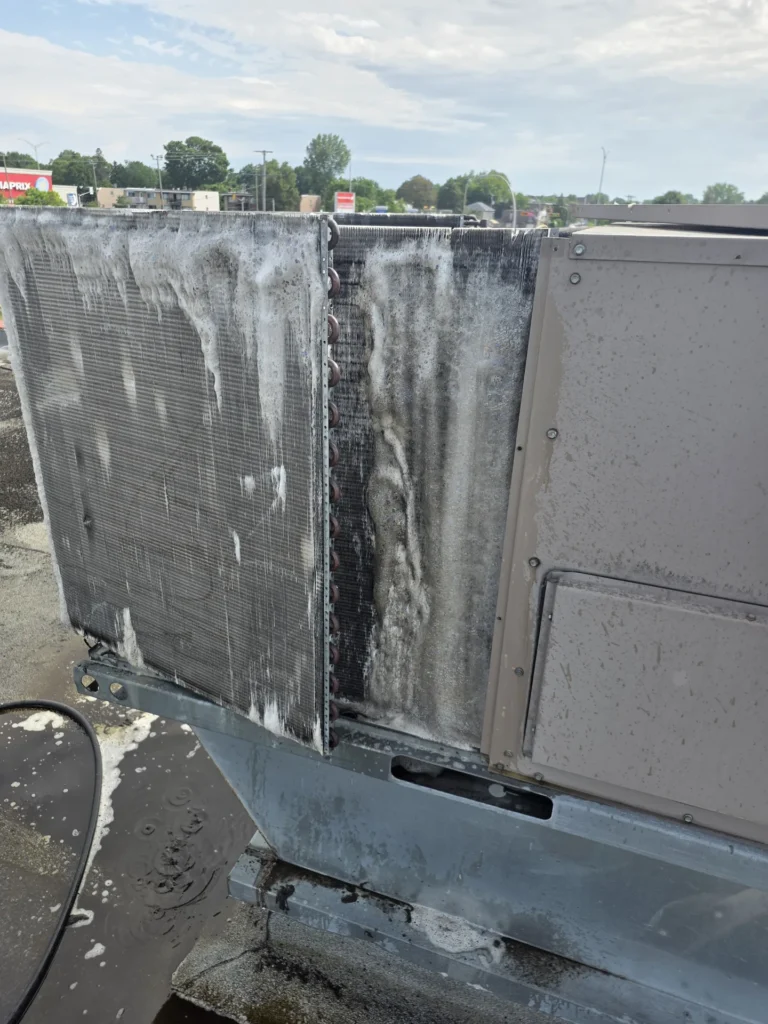
Street dust, pollen, hood grease: a layer builds up between the fins. Heat exchange degrades, head pressure rises, and the compressor works longer for the same result. No one sees the breakdown coming because the unit keeps running while consuming more energy.
This is also what most shortens the lifespan of a unit, which is normally ten to fifteen years.
A dirty unit doesn't break down right away. It costs more first
Energy consumption goes up before anything breaks. This is what makes dirt buildup invisible, and it’s also what most shortens the lifespan of a unit.
Service Rates Hours
$250 + taxes
Daytime service call. Includes one hour of labor and travel.
$120 / hour
Hourly rate beyond the first hour.
$600
URGENT service call between 4 p.m. and 7 a.m. Includes two hours of labor and one hour of travel.
7 a.m. to 11 p.m.
Window during which calls are taken, seven days a week.
One visit per year is enough for most residential cases. In commercial settings, or in environments with high dust or grease, two annual visits are justified.
A periodic defrost cycle is normal. A layer of ice that persists, a block of ice at the bottom of the unit, or a defrost cycle that never triggers is not: that requires a service call.